Defining What’s Next in Obesity Drug Development
As ObesityWeek® approaches, the focus is no longer simply on what comes next in obesity drug development, but on what should matter next. With the science expanding beyond weight loss, how should sponsors define and demonstrate value?
The answer requires looking across the broader cardiovascular-kidney-metabolic (CKM) continuum and considering what interconnected disease biology means for differentiation and development strategy. We sat down with Dr. Anup Sabharwal, Global Head of R&D and Scientific Strategy, CKM at Syneos Health to explore what sponsors should be thinking about next.
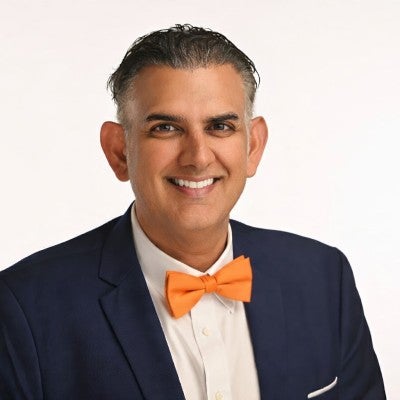
Question #1: As the obesity landscape evolves, what should sponsors be thinking about beyond weight loss?
Dr. Sabharwal: Weight loss will remain central to demonstrating efficacy, but as the obesity treatment landscape expands, it may increasingly become a baseline expectation, shifting differentiation toward what therapies deliver beyond the scale.
The more strategic question is what that weight loss means for a patient's health over time. Can an intervention affect the biologic drivers of disease risk? Can it improve outcomes in cardiovascular, kidney, hepatic or metabolic disease? And importantly, are those benefits durable?
Differentiation may depend on factors such as durability, patient persistence and adherence, tolerability, preservation of lean mass and impact on downstream disease.
For sponsors, that means considering the broader value of an asset from the earliest stages of development, rather than treating weight reduction as the end goal.
Question #2: Why should obesity increasingly be viewed within the broader cardiometabolic continuum?
Dr. Sabharwal: Obesity doesn't exist in isolation. Adipose dysfunction can contribute very early on to insulin resistance, chronic inflammation and altered lipid metabolism, which in turn are associated with conditions including type 2 diabetes, atherosclerotic cardiovascular disease, chronic kidney disease (CKD) and metabolic dysfunction-associated steatohepatitis.
That makes obesity a potential gateway into multiple preventive and therapeutic development pathways.
The CKM continuum is interconnected, but it is not homogeneous. Cardiovascular, kidney, hepatic and metabolic diseases each bring distinct biology, patient needs, outcomes and evidence requirements. Sponsors must navigate both the relationships across CKM and the nuances within each individual disease.
This reflects the broader CKM development model, where shared biological pathways and overlapping patient populations require expertise that extends across traditional therapeutic boundaries while retaining depth within individual indications.
Explore how obesity's interconnected biology is reshaping development strategy across the CKM continuum.
Question #3: What does this shift mean for development decisions earlier in the asset lifecycle?
Dr. Sabharwal: Decisions made early in development can have implications far beyond the initial obesity indication.
Sponsors should consider whether emerging data reveal cardiovascular, renal, hepatic or other metabolic signals that help clarify where an asset has the strongest biologic fit. Those insights can inform decisions around patient populations, biomarkers, endpoints and additional development pathways.
The goal isn't to pursue every possible opportunity. It's to identify where the underlying science provides the strongest rationale for meaningful differentiation.
This is also where clinical, operational and commercial strategy need to come together. Development decisions should consider not only the scientific and regulatory pathway, but also trial feasibility, future unmet need and the evidence ultimately needed to support clinical adoption.
Question #4: What are sponsors at risk of overlooking as obesity trials become more complex?
Dr. Sabharwal: As development expands across the CKM continuum, sponsors need to design around the reality of the patients who will ultimately receive these therapies.
People living with obesity may have multiple conditions, complex medication regimens and long-term care needs. That multimorbidity can affect recruitment, stratification, background therapy, safety monitoring, protocol burden, retention and titration.
Early phase biomarker changes can help sponsors navigate some of that complexity by clarifying biologic fit, informing patient selection, and providing early evidence of potential disease modification. Depending on the potential therapeutic pathway, that might include inflammatory or glycemic measures, cardiac or renal biomarkers, body composition or imaging or hepatic measures.

Real world evidence can also help sponsors better understand patient populations, treatment patterns, care pathways outside the controlled trial environment, and treatment differentiation. Combined with patient-focused operational approaches, those insights can help sponsors identify where eligible patients can realistically be found, reduce participation burden and design studies that are both scientifically rigorous and more reflective of clinical practice.
Question #5: How can sponsors design obesity programs today to succeed in the treatment landscape tomorrow?
Dr. Sabharwal: The starting point is to begin with the end in mind.
Evidence strategy should begin early, with a clear view of what will constitute meaningful value for regulators, clinicians, patients and payers. When an asset has a strong biologic rationale in a specific complication or phenotype, development plans should align endpoints and evidence generation to demonstrate that value.
Critically, that strategy shouldn't begin in phase III. Decisions about patient populations, biomarkers and data collection made earlier in development can shape whether sponsors are ultimately able to demonstrate an asset's broader value.
That means looking beyond regulatory approval and designing development programs with future adoption in mind, integrating scientific and regulatory requirements with operational realities, evolving evidence expectations and market considerations.
As obesity continues to reshape treatment paradigms across cardiovascular, kidney, hepatic and metabolic disease, differentiation will depend on making deliberate development choices grounded in disease biology, patient needs and the realities of clinical practice.
The conversation is shifting from how much weight an asset can deliver to where it can create the greatest value: which patients benefit most, which disease pathways can be meaningfully altered and whether those benefits endure over time.
Find out how Syneos Health brings together scientific, clinical, operational and commercial expertise to help sponsors navigate what's next in obesity drug development.
Contributors
Anup Sabharwal, MD MBA FACC FACE FESC FAHA FASPC FNLA
Global Head of Research & Development and Scientific Strategy, Cardiovascular-Kidney-Metabolic (CKM)
Syneos Health
Related Content



Looking for exclusive insight?