Early Signals at ASCO 2026 | Is MRD Ready to Guide Drug Development?
Can MRD do more than measure response? Could it redefine how multiple myeloma therapies are developed, approved and ultimately used to guide patient care?
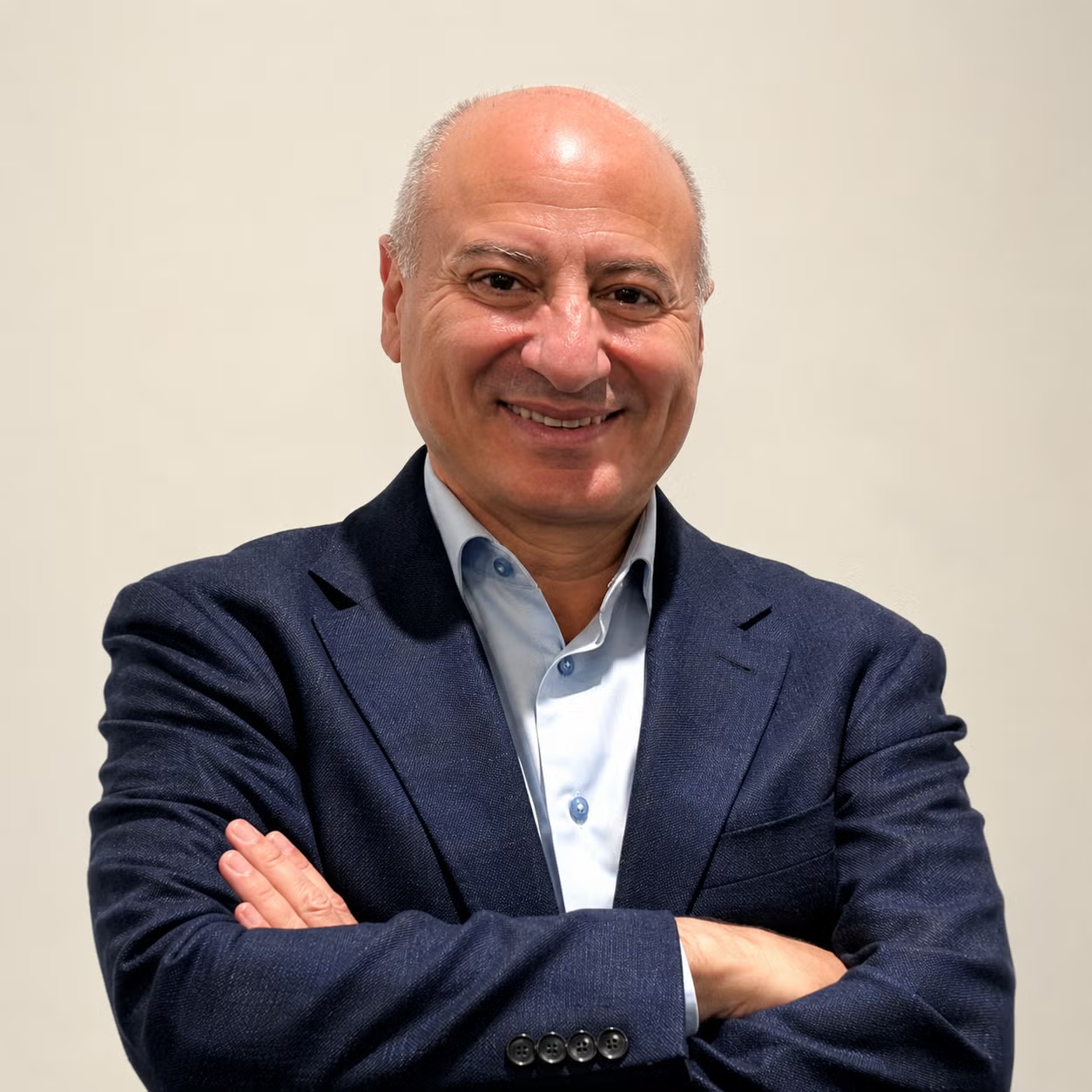
In this episode of Early Signals, recorded live at ASCO 2026, Wael Harb, MD, sits down with Samer Al Hadidi, MD, Associate Professor and Clinical Director of the Amyloidosis Program at the Universty of Texas Southwestern, to explore why minimal residual disease (MRD) has become one of the most important conversations in multiple myeloma.
Together, they discuss how increasingly sensitive MRD testing is changing the definition of remission, supporting time-limited treatment strategies and emerging as a potential surrogate endpoint for drug development. They also examine what recent ASCO data — including the MajesTEC studies — may signal for the future of treatment sequencing, combination strategies and the long-term goal of curing multiple myeloma.

In this episode, you'll learn:
- Why MRD has become central to defining remission in multiple myeloma.
- How MRD is influencing treatment duration, escalation and de-escalation strategies.
- What the FDA's acceptance of MRD as a surrogate endpoint could mean for oncology drug development.
- Why sustained MRD negativity may be more meaningful than a single negative result.
Related Content



Looking for exclusive insight?